In electronic component stamping dies, nitrogen gas springs work in the following way:
I. Working Principle
Compression energy storage stage
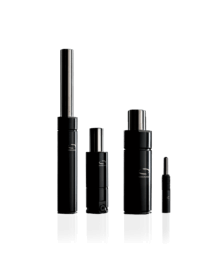
When the die is closed for stamping, the external force compresses the high-pressure nitrogen in the sealed cylinder through the plunger rod. At this point, the volume of nitrogen decreases and its pressure increases, converting mechanical energy into gas potential energy for storage.
Release work phase
After the stamping is completed, the external force is removed. The compressed nitrogen expands, pushing the plunger rod back to its original position and generating a stable elastic force. This force is used to push out the workpiece, assist in demolding or balance the pressure of the mold.
Ii. Core Working Characteristics
High stability
Nitrogen, as an inert gas, has stable chemical properties and can maintain a constant pressure inside the cylinder for a long time, ensuring consistent elastic pressure output for each stamping action.
Precise compression control
By adjusting the inflation pressure (up to 150bar/2175psi), the size of the elastic pressure can be precisely controlled to meet the micron-level precision requirements for electronic component stamping.
Rapid responsiveness
The gas compression rebound speed can reach 0.2 to 0.5 seconds per time, meeting the production requirements of high-speed continuous stamping (with a maximum frequency of 100 times per minute).
Iii. Specific Applications in Molds
Trimming/punching process
Provide reverse balancing force at the moment of blanking to reduce material deformation; Immediately remove the scrap after stamping to prevent the die from getting stuck.
Precision positioning
Through the multi-nitrogen cylinder array layout (series and parallel combination), multi-point voltage equalization is achieved in the miniaturized mold to ensure the flatness of thin electronic components (such as connector spring pieces).
Buffer protection
Absorb the vibration generated by high-speed stamping and protect the precision guiding components (such as guide pins and guide sleeves) from impact damage.
Iv. Technological Advantages
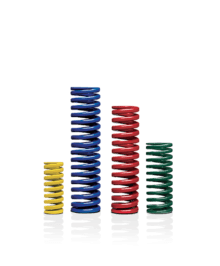
Volume reduced by 60% compared to traditional springs , suitable for compact design of electronic molds
The service life is over 1 million times , significantly reducing the maintenance frequency
No oil contamination , meeting the requirements for clean production of electronic components
Typical application case: In the stamping of FPC flexible circuit boards, a micro nitrogen gas spring (with a diameter of 8mm) array is adopted, which can provide a constant top force of 800N within a 0.5mm stroke, with a tolerance controlled within ±3%.